
Fall 2026 News
Happenings in and around China Camp
IN THIS ISSUE:
Happy 10th, Martin | Heritage Day wrap-up | Donor spotlight | Mapping migrations | New brew | Cool coin | Golden anniversary teaser
MILESTONE
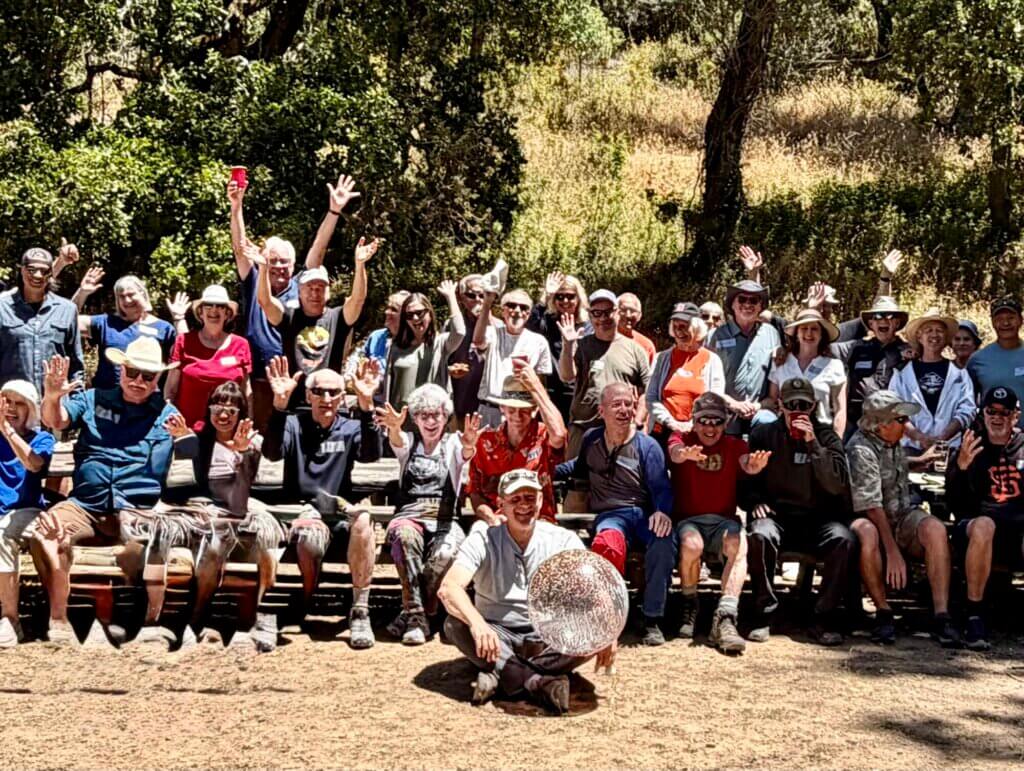
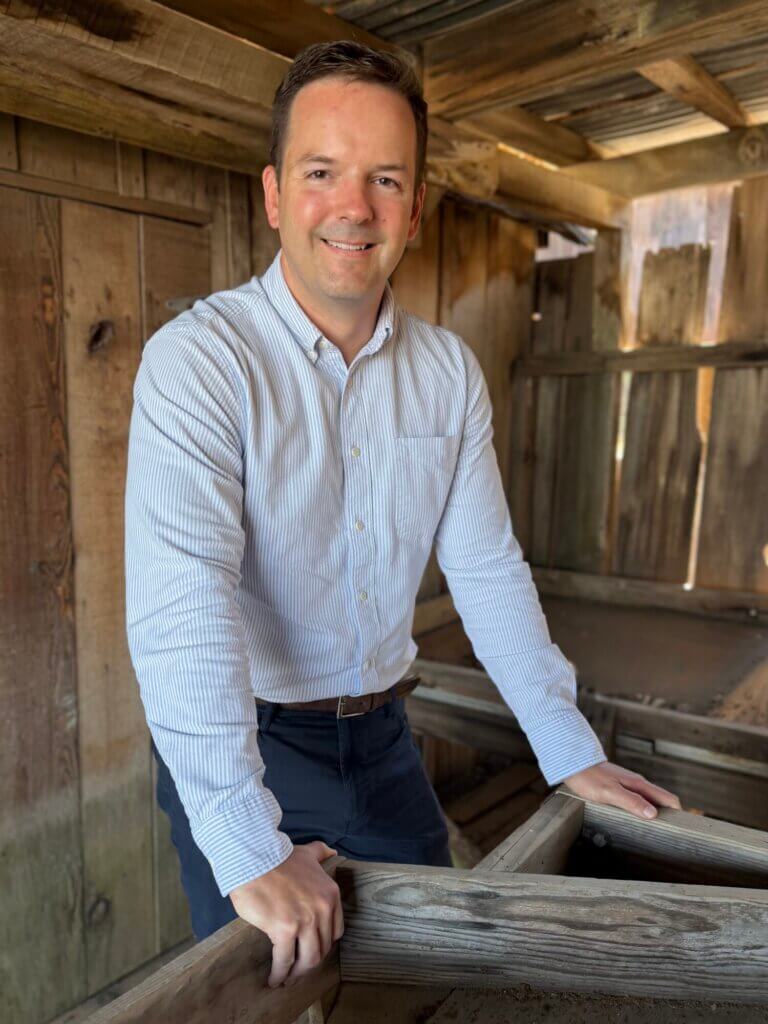
Ten years for our executive director
With a decade under his belt as Executive Director of Friends of China Camp, Martin Lowenstein has had plenty of memorable moments in the park. To commemorate this special milestone, we asked Martin to recall some of his most unforgettable events. He did—with the caveat that every day working with “these dedicated volunteers and staff blows me away.”
2018: Our first truck. “We had been managing the park for years, using the vehicles, equipment, and tools left here by California’s Department of Parks and Recreation (DPR). Then DPR repossessed all of it. Everyone here felt hopeless, until FOCC board member Arlin Weinberger stepped up, and donated funds for our first pickup truck. Her single act of generosity was the catalyst to rebuild. It gave us all hope.”
2020: Resurfacing Turtle Back Nature Trail. “At a time when most people were sheltering in place due to Covid, our volunteers, wearing the proper gear and with state approval, came together to retread our beautiful, ADA-approved trail. It was all capped off by a young woman in a wheelchair who cut the ribbon to re-open the trail. To see our volunteers do all that when the world had seemed to stop was really inspiring.”
2022: Gift of Paul Storm’s estate. “Paul was a San Rafael resident who loved China Camp. He volunteered here for years, and he got remarried on our beach. When he passed away, we were notified that he had left his estate, including his home, to Friends of China Camp. That opened my eyes to how deeply meaningful people’s relationship can be to this park.”
2023: Testifying in Sacramento. “There was proposed legislation (SB668) that was going to remove the ‘sunset clause’ of an existing law (AB42), which authorized ‘qualified nonprofits’—such as Friends of China Camp—to operate California state parks. SB668 aimed to permanently allow the state to enter into these operating agreements, as it did with FOCC in 2012. I testified in support of the bill, which was intimidating, but it was also empowering. And it passed.”
2025: Unexpected kudos. “At an event, I met Kate Wheeler, the executive director of Crystal Cove Conservancy, the nonprofit partner of Southern California’s Crystal Cove State Park. She said ‘Oh, you’re with China Camp. Whenever there’s talk about how a state park should be operated, I always hear China Camp’s name as a model.’ I nearly keeled over. It was so affirming to hear that FOCC represents a successful model, and people are noticing.”
2026: The flooding of China Camp Village. “When January’s king tides flooded the village, that made me feel the park’s vulnerability—to nature. As much as we talk about cultural resource preservation and how it’s one of our prime directives, at the end of the day, nature will prevail. Those king tides were a real reminder of that.”
—Harriot Manley/FOCC volunteer
CELEBRATION
Heritage Day hits a high note
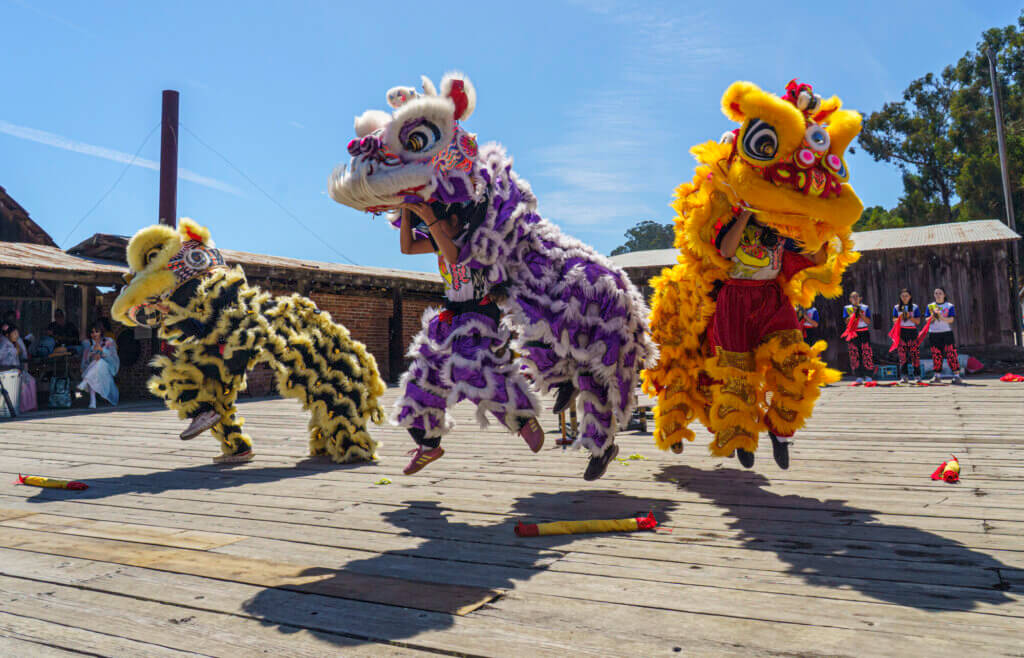
Friends of China Camp’s annual Heritage Day, a celebration of the region’s Chinese culture, roared in like a Chinese lion this past August, filling the historic China Camp Village with fun, food, music, and discovery.
“Over the years, our incredible volunteers and staff have created a remarkable celebration, honoring the region’s Chinese heritage and inviting the community to the party,” says Martin Lowenstein, executive director of Friends of China Camp.
This year, a highlight was the sailing in and docking of the Grace Quan, a hand-made replica of a Chinese shrimp-fishing junk (a project spearheaded by FOCC board member emeritus John Muir, who piloted the boat and gave a presentation on the junk-building project to a packed crowd). On the pier to greet the Grace Quan was a glittering Chinese dragon, held aloft by dancers from the Redwood Empire Chinese Cultural Association. With Chinese drums thrumming, it felt like a ripple in time—and definitely not something you’d normally see or hear on the bay.
Throughout the day, families enjoyed folding origami cranes, making wooden toy boats, playing mahjong, and flying kites. Performances included dancers and martial arts athletes from the Marin Chinese Cultural Association, and musicians and singers from the San Francisco Guqin and Xiao Music Society and the San Francisco Senior Center. Audience members took part in a tai chi class led by David Chung. Representatives from the National Park Service, California State Parks, Marin History Museum, and Wildcare were on hand too, rounding out the outstanding day by the bay.—HM
DONOR SPOTLIGHT
Charlie Litchfield
Charlie Litchfield is a member of a legendary family whose roots in Marin County extend from psychedelic rock to philanthropy. And not many families here have their name displayed on an enormous neon sign visible from Highway 101.
Charlie leads his family’s Litchfield Foundation, started by his colorful grandfather, Irving “Whitey” Litchfield, a construction magnate, and Charlie’s late father, Perry, who was an attorney and founder of the Bayside Marin Treatment Center in San Rafael. Charlie inherited his love of China Camp from his dad, and every year, the foundation makes significant donations to the park.
Charlie, a gracious 39-year-old father of four (ages 2 to 14), has a long and varied resume: hotel manager, restaurant owner, attorney. These days, he works as a real estate broker and co-owner of Rosebay Behavioral Health in San Anselmo. He also inherited his dad’s keen interest in mental health, and owns the property at Bayside Marin, which his dad founded stemming from his struggles with alcohol. Charlie likes to cook, can play the piano and the trumpet, and serves on the board of the San Rafael Public Library.
His family’s history is equally eclectic. First, there’s that giant “Litchfield’s” sign, towering over one of what was once one of San Rafael’s most controversial chunks of real estate. In the late 1940s, Whitey built the Bermuda Palms Motel in the Canal neighborhood. Over time, he developed it into a swanky resort with a pool, spa, and ballroom that attracted movie stars like Lauren Bacall, Humphrey Bogard, and John Wayne (in town during the filming of 1955’s Blood Alley at China Camp Village).
In the ’60s and ’70s, the ballroom morphed into a concert hall, dubbed “Woodstock West,” attracted big names including Pink Floyd, Janis Joplin, and the Grateful Dead. But in the ’80s the luster faded, and the site became infamous for drug dealers and Hells Angels. It was shuttered in 1988.
Whitey has been described as a man with a heart of gold—and with a Saturday Night Special in his briefcase. Grandson Charlie is a straight arrow more suited to Patagonia fleece than psychedelic T-shirts. But the family’s commitment to creating and nurturing communities spans the generations. It is people like Charlie Litchfield who keep China Camp thriving.
And the iconic Litchfield’s sign? Though it now resides above a retail center, it has been carefully restored, and has been designated by the City of San Rafael as a local landmark.
—Janet Wiscombe/FOCC volunteer
PARTNERSHIPS
New antenna helps unravel migration mysteries
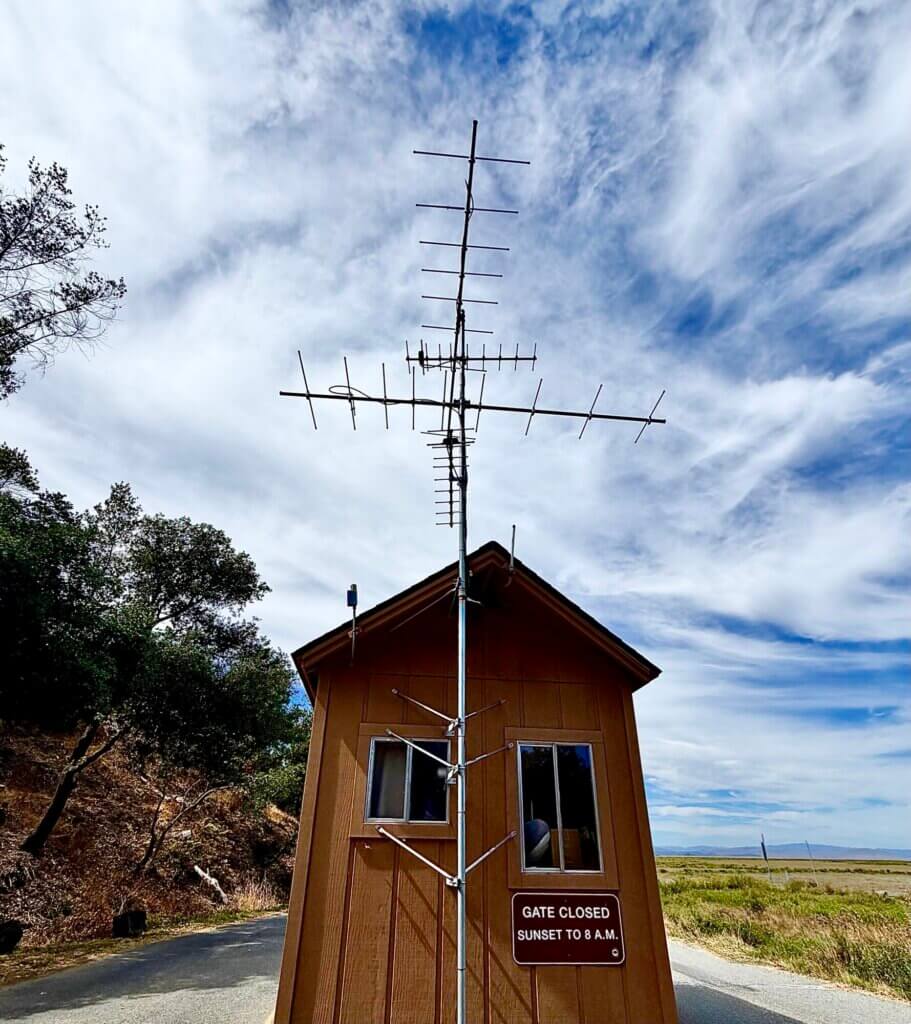
Pull up to the entrance kiosk at China Camp’s Back Ranch Meadows Campground, and you might spy a tall antenna rising from the kiosk’s rooftop. No, it’s not the remnant of a pirate radio station started by Friends of China Camp volunteers. It’s a Motus tower, and, with fall migration now in full swing, what it detects may surprise you. With any luck, it’ll surprise researchers too.
Motus, the Latin word for “movement,” is a global network of radio receivers built as a way to track small migratory animals, such as birds and bats. Launched by Birds Canada in 2014, the network now encompasses more than 2,000 stations across five continents. The globe-spanning system tracks tens of thousands of animals from hundreds of species, giving scientists a window into journeys that were once nearly impossible to follow.
With the help of researchers from the San Francisco Bay National Estuarine Research Reserve (NERR), China Camp’s Motus tower joined the network last year. The park’s protected wildlands, especially its vitally important tidal wetlands, provide prime resting places for migrating species.
Every tagged flier that visits the park within range of the tower adds data on where, when, and how the animal migrates. That data helps researchers understand migration patterns, and can lead to better protections and chances of survival—especially valuable for rare and endangered species.
Curious about what’s being detected at any given time? Tune in to our Motus tower’s dashboard to see what’s zooming around in real time—no pirate radio required.
—Steve Fait/FOCC volunteer
NEW BREW
China Camp Lager debuts at Village Cafe and more
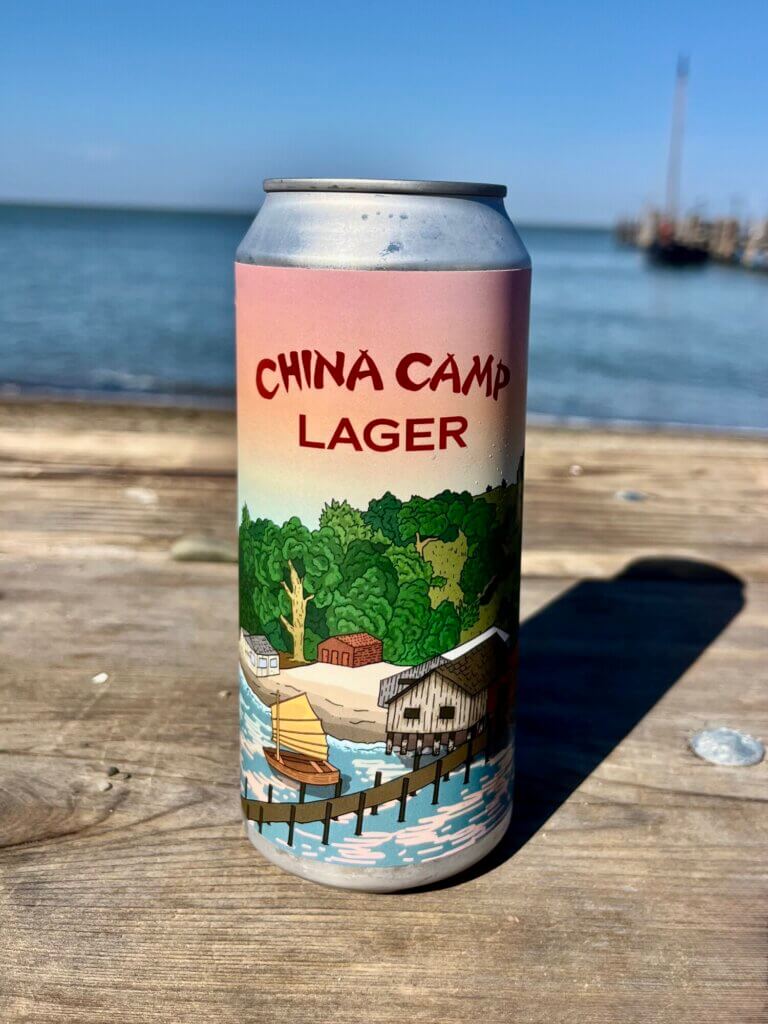
It’s pretty cool that a local, renowned brewmaster created a beer just for us. China Camp Lager, created by Phil Cutti of the San Rafael-based Ripple Beer Project, is now available at the historic Village Cafe.
Cutti, a park regular, approached Friends of China Camp about creating a special beer for sale at the park. Cutti, co-founder of Headlands Brewing Company and former president of the Bay Area Brewers Guild, also wanted 10 percent of the sales to support Friends of China Camp, which receives no financial support from the state to run the park.
“I wanted the beer to be a celebration of community, and the hard-working people who make it happen,” says Cutti.
Ernie Stanton, the longtime FOCC volunteer and former board member who manages the park’s Village Cafe, suggested focusing on a lager-style beer. The can’s whimsical artwork was designed by local artist Julia Jackson-Clark, sister of Carly Jackson-Clark, Friends of China Camp’s program coordinator.
China Camp Lager is available at the park’s Village Cafe for $5 for a 16-ounce can. Cafe hours are generally Friday, Saturday, and Sunday afternoons. The beer is also available in San Rafael at Andy’s Market (4-packs, Loch Lomond location), Marinwood’s Big Rock Café (4-packs & on tap), and at Mill Valley Market (4-packs).—HM
HISTORY
Visitor finds tiny treasure from the 1700s
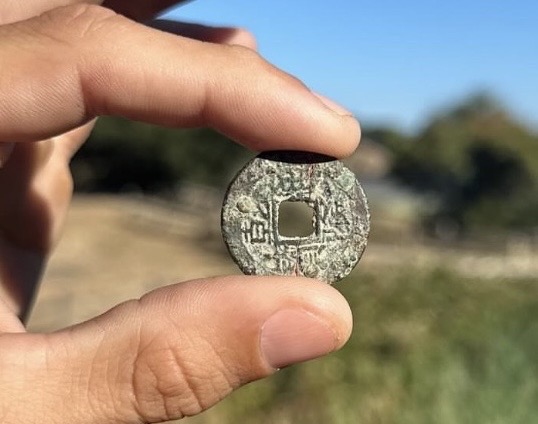
Always remember to look down—you never know what you might spy at China Camp. Recently, a visitor did just that along our shoreline and found an important artifact, a Chinese coin nearly three centuries old.
The tiny copper-alloy coin, featuring a square central hole, is called a Qianlong Tongbao (乾隆通宝), a coin minted during the reign of Emperor Qianlong (1736–1795) during China’s Qing Dynasty. The Qianlong era was a time of economic prosperity and flourishing trade, during which millions of these coins were produced. Typically, there are four Chinese characters on the coin’s front (“Qian Long Tong Bao”). On the coin’s back, there are two Manchu characters: the one on the left means “Bao” (treasure), and the one on the right identifies the mint where the coin was made. Some coins minted in Xinjiang were struck from local red copper and are known as Xinjiang red coins.
Originally brought to the West Coast by early Chinese immigrants, these coins have often turned up along the region’s shorelines. Once in the U.S., the coins lost their value, but were often repurposed as game pieces, gambling tokens, and charms.
While we are thrilled when visitors make discoveries like this, remember that all cultural artifacts found in China Camp State Park must remain in the park. If you think you have found a cultural artifact, please leave it where you found it and call our Ranger Station at (415) 456-0766.
—Carlotta Jackson-Clark/FOCC staff
PARTY TIME
Golden jubilee kicks off in January
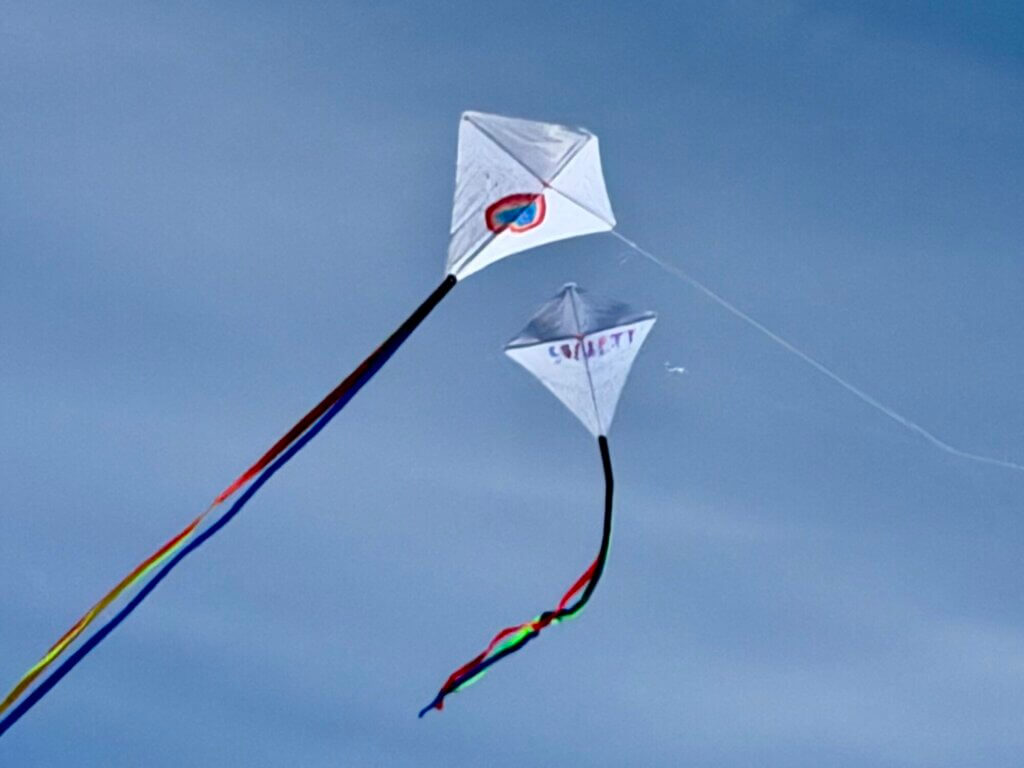
Birthdays may come around only once a year, but at China Camp, we think they should come around way more than that. How about 12 times? Every month of 2027, we’ll be commemorating the 50th birthday of China Camp State Park with a special event, and you’re invited.
For the park’s half-century year, Friends of China Camp is putting together an incredible mix of fun things to do, including a kite-flying festival, fun runs, trivia nights, book readings, special speakers, art events, and even a witches paddle for Halloween. (Don’t know what that is? You’ll just have to come on out and see it.)
It’s our way of sharing the fun with our incredible community. For the past five decades, China Camp has been a place where people can relax and play; where nature can flourish; where history is preserved. Now, it’s time to honor this amazing place. Come join in the fun.—HM
Events
Make the most of fall at China Camp
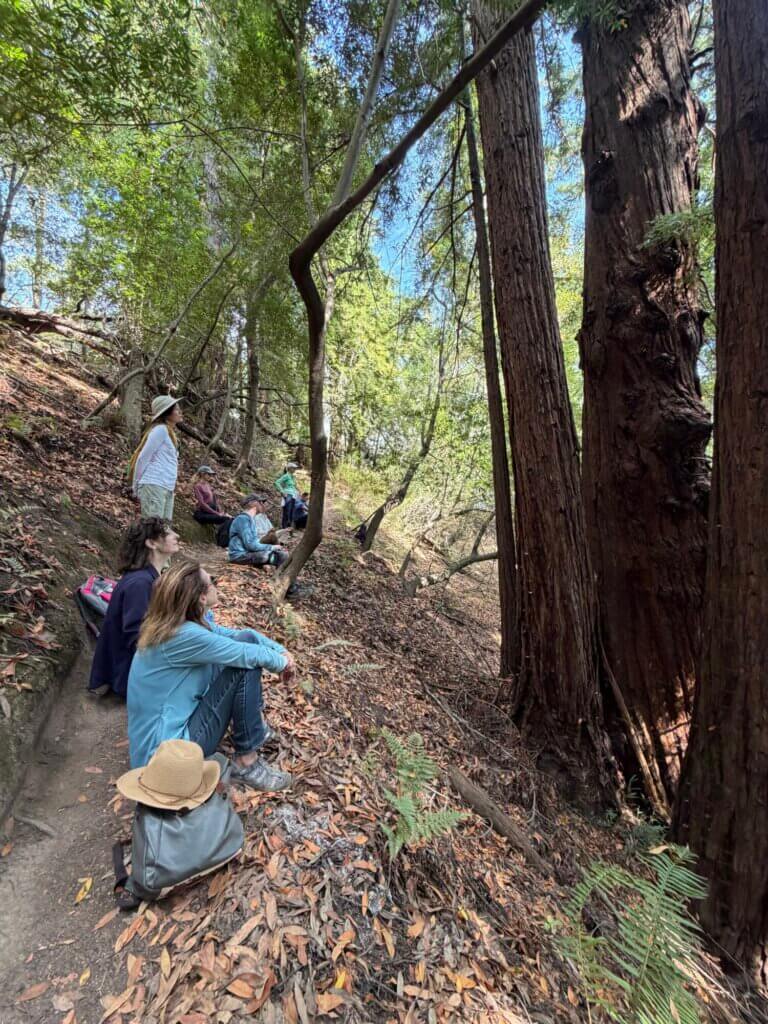
Bored? Impossible, when China Camp is in your backyard. Take part in one of our outstanding monthly events. We’ve got activities and experiences to cover all kinds of interests—history, nature, art, personal expression, science, and more. creativity. Kids can join special Junior Ranger programs too. Be sure to check out all our upcoming events.