

Summer 2026 News
Happenings in and around China Camp
IN THIS ISSUE:
Park praise | Plein air painting | Safe splashing | Village makeover | New celebration | Cafe queen | Red flag season | Be an ambassador | Slitherin’ news | Fun events
RECOGNITION
China Camp gets statewide shout-out
It’s nice to get noticed. So it’s been oh-so-rewarding to get called out in the official blog of the California State Parks Foundation, the leading nonprofit dedicated to protecting, improving, and advocating for all 280 state parks in the Golden State.
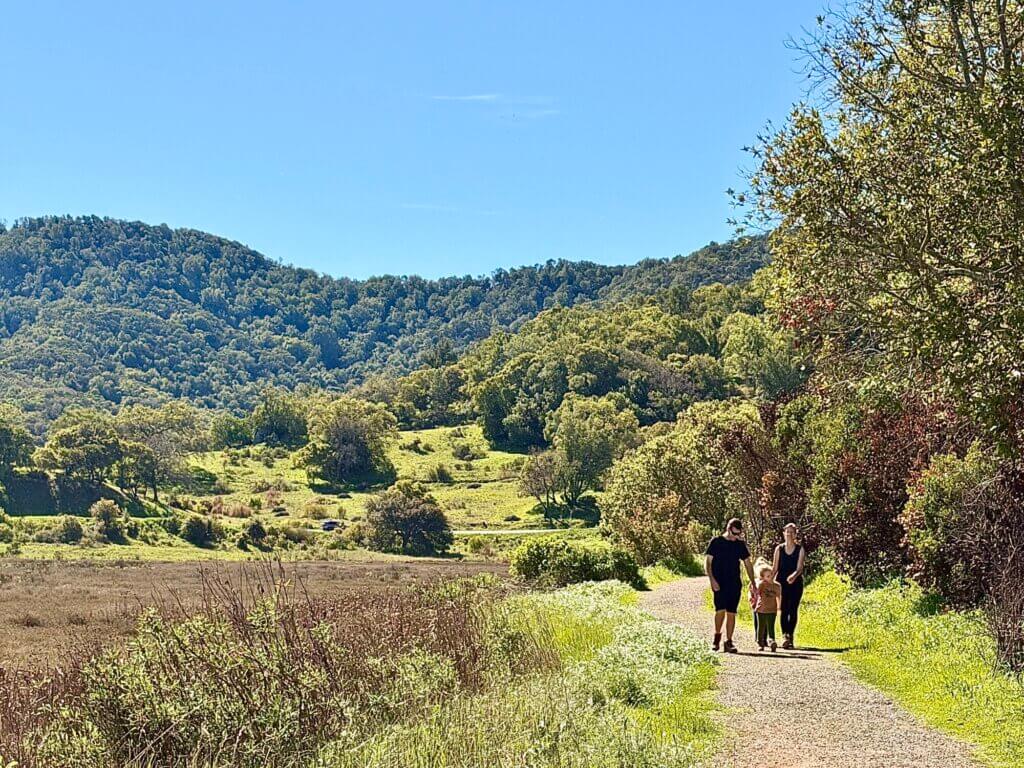
The entertaining write-up presents the perfect weekend getaway at the park, including biking and hiking tips, a peek into the park’s past, the lure of the beach, and helpful camping information and tips.
The blog also links to this short video featuring Friends of China Camp Executive Director Martin Lowenstein, who sheds light on the park’s remarkable history and why it’s so important to protect this unforgettable place.
California State Parks Foundation Executive Director Rachel Norton also showered praise on China Camp in a recent article in the Marin Independent Journal. Focusing on the 50th anniversary of the foundation’s acquisition of the land now protected as state park, Norton stressed the success of the public/private partnership that Friends of China Camp has created with California State Parks, and how a nonprofit like FOCC can be “an effective and important steward of the landscape.” —Harriot Manley/FOCC volunteer
DEBUT EVENT
“Brush with Nature” fills the park with art
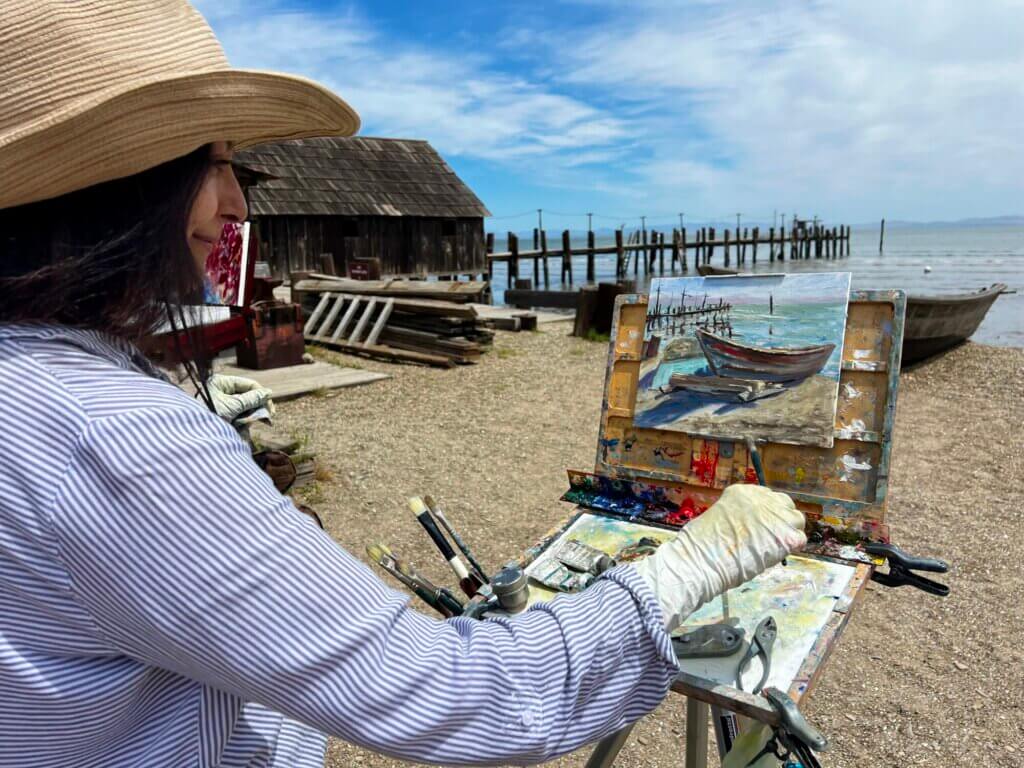
Artists transformed China Camp into an outdoor gallery earlier this month for the park’s first-ever “Brush with Nature” event. The special day focused on plein air painting, a term used for artworks created in the field, rather than indoors in a studio.
Plein air artists were scattered throughout the park, so that visitors could watch them capture China Camp’s beauty in real time. At the village, visitors could view more plein air paintings—and maybe find something special to take home—at a one-day art sale. (A portion of the proceeds went to Friends of China Camp.) Plein air painting classes for kids and adults were also offered.
Special FOCC thanks to artist Laura Culver for her above-and-beyond participation, and all the other artists who took part: Jenny Blackburn, Michael Feldman, Richard Lindenberg, Qinqin Liu, Priscilla Patey, Paul Rice, Kevin Smith, Randall Strauss, Barbara Tapp, and Patti Titman.—HM
SUMMER FUN
How to make a (safe) splash this summer
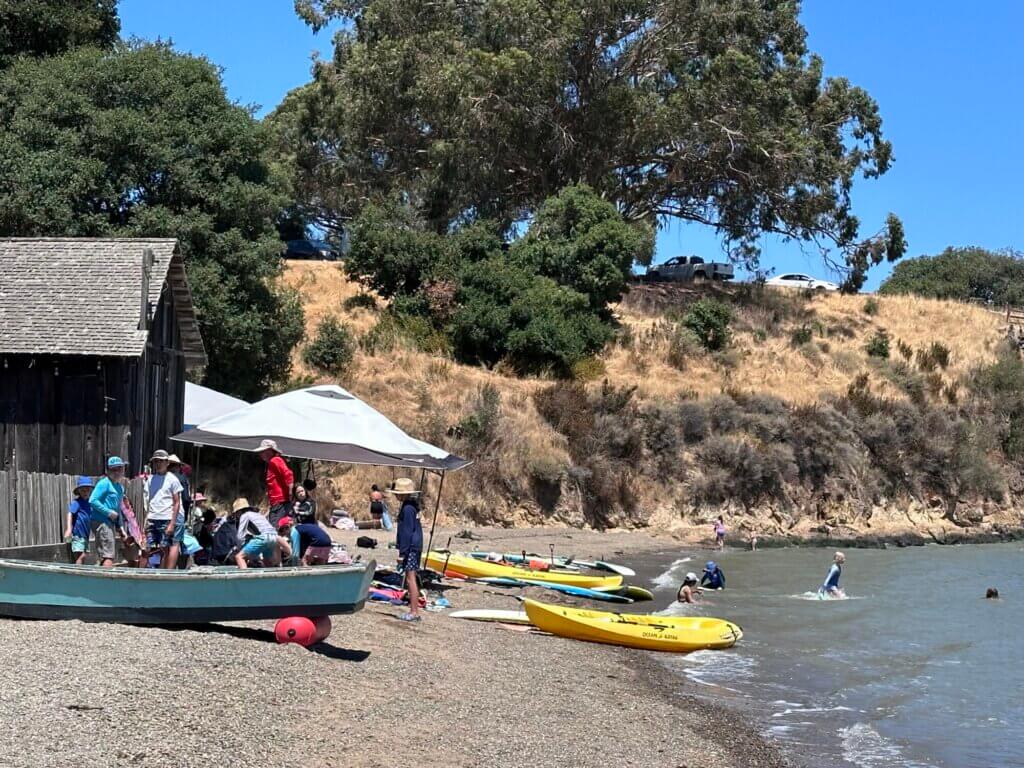
China Camp Beach just made KQED’s list of 20 Best Swimming Spots in the Bay Area, and we couldn’t agree more: China Camp is a great place to dive in this summer. But, before you take the plunge, follow these good-sense guidelines for a safer splash-swim-paddle visit to China Camp.
Tip 1: Check tide charts. Come at low tide and you might be met by mudflats, not inviting water. To avoid muddy disappointments, and to reduce the risk of strong incoming and outgoing tides, check local tide charts before you head to the beach. For best conditions, aim for China Camp’s “slack tides,” the period when the tide is neither going in nor out. The Bay Area Sea Kayak Club’s trip planner is a great resource that includes safety advisories, such as the risk of strong winds. Friends of China Camp volunteers also post a tide chart at the Village Cafe and in the museum.
Tip 2: Hug the shoreline. Offshore winds, blowing from land to water and kicking up waves, make it tougher to paddle or swim back to shore. Currents also get stronger the further out you swim or paddle. To be safe, stay close to the more protected waters along the shoreline.
Tip 3: Protect your kids with certified flotation devices and water shoes. Forget the cheap “floaties.” Children should wear a certified life-preserver or personal flotation device (PFD). Protect little feet from sharp rocks and shells with snug water shoes, not flip-flops.
Tip 4: If you’re heading further out, be prepared for the bay’s cold water. Although shallow water near China Camp’s shoreline feels relatively warm this time of year, it’s much chillier (55ºF average) further from shore. Winds can cause further chilling. If you’re swimming or paddling and plan to head out beyond our pier, consider wearing a wetsuit or layers of synthetic clothing (never cotton) to retain body heat even when wet.—HM
RESTORATION
Village upgrades keep on coming
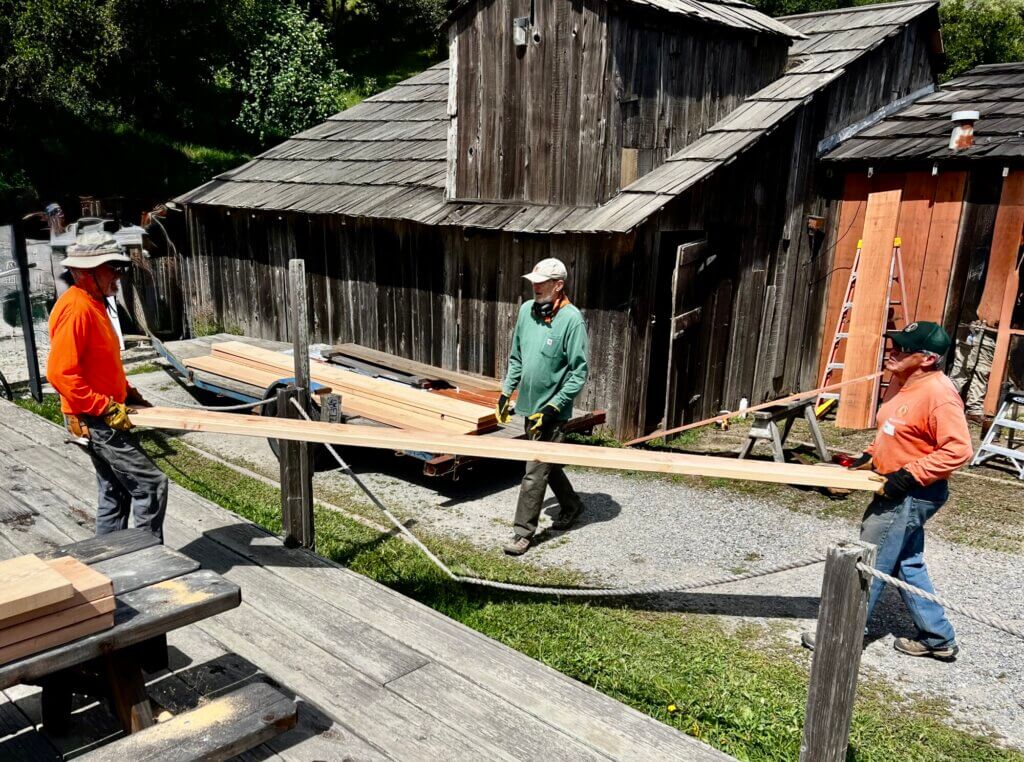
Fresh fir planks are hammered into place on the pier. Weathered but sturdy corrugated siding replaces pitted sheets in the village. New boards are secured into place on the back of the cafe.
All these repairs are part of Friends of China Camp’s ongoing efforts to make the village look as good as…old. Maintaining this state of “arrested decay” means using materials that are historically accurate and that weather naturally. Replacement materials include untreated fir boards that will gray with time; metal siding that’s colored by a patina of rust, and old-style square nails that match the originals.
Over a century of wind and salty air has given the village its historic character, and our ongoing preservation continues to honor that character, rather than erase it.
Friends of China Camp’s overall goal is to stabilize and restore the village structures, including the shrimp processing sheds adjacent to the pier and the village’s historic residences. We will also focus on restoring a 90-year old salmon-fishing boat that was a seasonal visitor to China Camp for much of its working life. The to-do list is long, but the timeless beauty of the place, in its weathered state of arrested decay, is a priceless reward for the work ahead.—Steve Fait/FOCC volunteer

CELEBRATION
Lions dance and kids smile at new event
With the sounds of Chinese drums and cymbals filling the air, lion dancers pranced across the deck at China Camp Village this past May, part of a full day of celebrations honoring Asian American Pacific Islander (AAPI) Heritage Month.
With its history as the last intact Chinese shrimp-fishing village in the Bay Area, the village served as an appropriate backdrop for the event. Celebrating AAPI Heritage Month at China Camp embodied the values of “community, connections, and caring,” said Cara O’Brien, Bay Area District Deputy Superintendent for California State Parks, who was on hand for the event. Also attending was Armando Quintero, Director of California State Parks.
Milton Quan, who along with his cousin Georgette (see item below) is one of the last original residents of China Camp, entertained everyone with a walking tour of the village. “When I was a kid here, life was incredible,” said the 91-year-old, repeatedly.
In addition to members from the Marin Chinese Cultural Association Lion Dance Team, other partners and community organizations took part in the day’s events, including the National Estuarine Research Reserve System, Marin History Museum, and Angel Island State Park. Elizabeth Lee of CyArk presented the nonprofit’s new 3D virtual tour of the village.
A big thank-you to all those who made this exciting cultural celebration possible.—HM
VOLUNTEER SPOTLIGHT
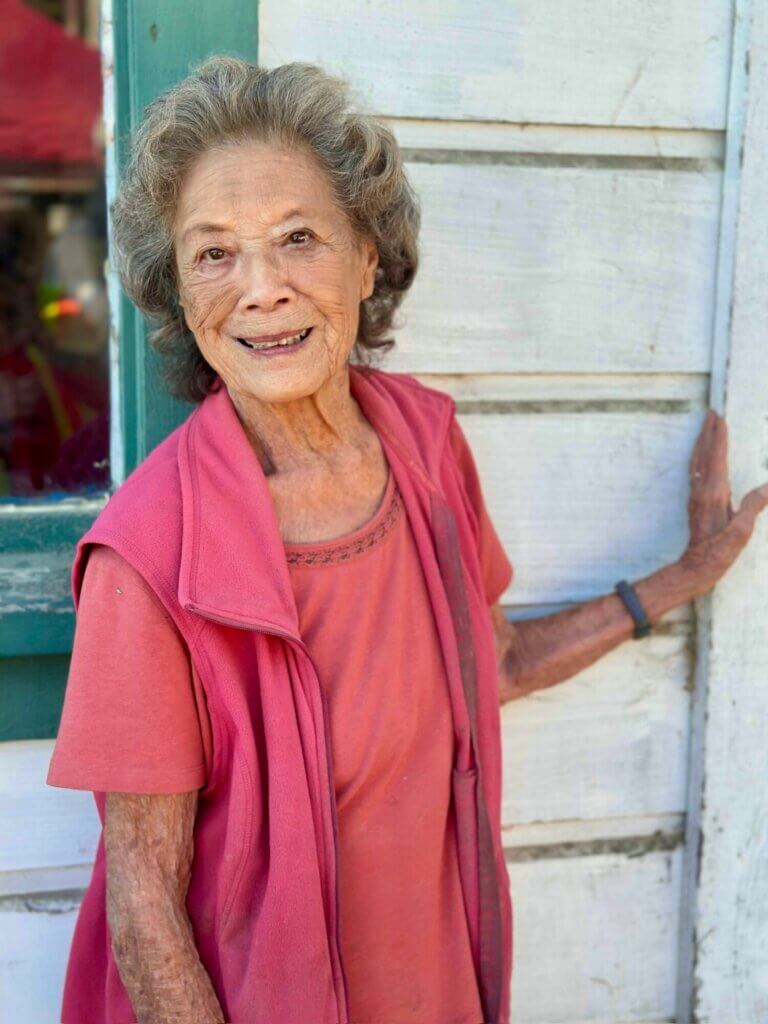
Georgette Quan Dahlka
For nearly 10 decades—yes, we said 10 decades—Georgette Quan Dahlka has shown up for work at China Camp Village Cafe. As a girl in the 1920s and ’30s, Georgette would peel mountains of shrimp in the cafe. These days, she quietly cleans the cafe’s kitchen or puts on a pot of coffee. Time in the cafe has been good to her: Georgette, now a widow, met both of her husbands in the iconic beachfront building.
Georgette stands out as the oldest remaining member of the original Quans, the renowned Chinese family that has lived and worked at China Camp since the late 1800s. (Georgette is the first cousin of Milton Quan; see previous article.) In the early years, the Quans fished for and sold shrimp. Later, they operated a fleet of pleasure boats, each vessel rented for $3.50 a day.
Georgette loved rowing the boats to the dock for the customers, and enjoyed working at the cafe. “I never thought of it as work,” she says. “In Chinese families, kids always help.”
She graduated from San Rafael High School in 1944, earned a degree at San Francisco State University, then worked as a librarian at Novato’s Hamilton Field when it was a U.S. Air Force base.
Her life is quieter now, but she’s not alone.
“What makes me happy is family,” Georgette says. Though she never had children, she does have a doting ensemble of nieces and nephews who visit and help out “Auntie Gette.”
So when you see the small Chinese lady with the swirl of gray hair quietly working at the cafe, say hi or give her a hug. She’s a crown jewel at China Camp, the Queen of the Cafe.—Janet Wiscombe/FOCC volunteer

SAFETY
Get ready for red flag season
With summer in full swing, it’s time to remind park visitors about fire safety, and how we can all reduce the risk of wildfire in the park. According to Fire Safe Marin, certain high-risk conditions—specifically hot, dry, and gusty or windy weather—trigger “red-flag warnings.”
At China Camp, we take these warnings extremely seriously, and when they are announced, we take steps to reduce the chances of wildfire in the park. When an alert goes into effect, here’s what we do:
- Post red flag warning signs, in English and Spanish, at Back Ranch Meadows Campground, Miwok Meadows, the village, and at our scenic points.
- Ban the use of outdoor grills, and campfires until the warning is lifted.
All year long and all over China Camp, volunteers, camp hosts, and park employees pitch in to reduce the risk of catastrophic wildfire by removing dead or dying trees in developed areas, clearing flammable invasive weeds, and cutting grasses. FOCC has also partnered with city, county, and state agencies to dramatically reduce fire fuels throughout the park, cutting the risk of wildfire not just in China Camp, but in neighboring communities too.
To check if a warning is in effect, visit this National Weather Service website.—HM
VOLUNTEERING
Want a new summer outfit?
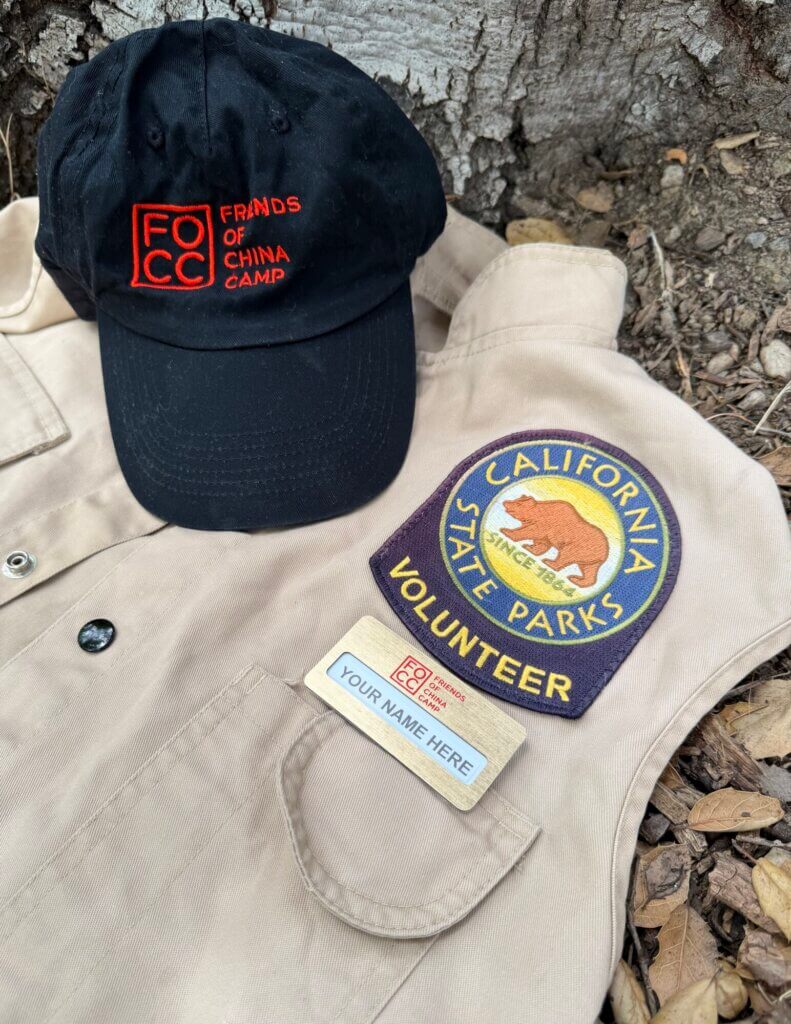
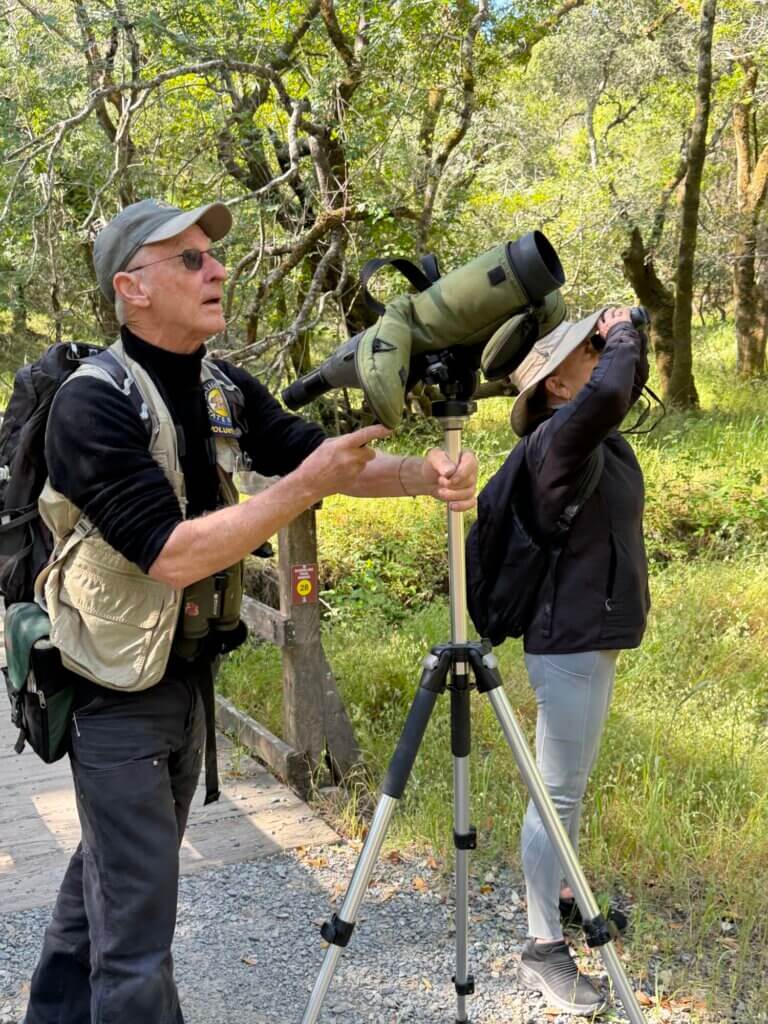
If you love our trails, especially if you like to walk, hike, run, or mountain bike at China Camp, we have a fun, easy way for you to give back to the park: become a Friends of China Camp Trail Ambassador. And big bonus: you get a snappy utility vest, emblazoned with jazzy patches and your very own customized name tag, plus a special hat for FOCC volunteers.
As an ambassador, you’ll be out in the field, interacting with visitors and helping keep trails safe for all. Just put on your ambassador outfit when you head to the trails for your regular hikes or rides. Does someone need directions or trail tips? That’s your cue to share a map and give helpful suggestions. Tree limb blocking a route, or a fence down? You’ll be right on it, taking notes and photos to share with our maintenance team.
Find out more about this fun and important opportunity by emailing FOCC Program Coordinator Carlotta Jackson-Clark at cjackson-clark@friendsofchinacamp.org, or call (415) 456-0766.—HM
CRITTERS
Snake savvy
When temps warm up, so do your chances of seeing some of the park’s most important species: snakes! Though they might give some folks the willies, the species you are most likely to see at China Camp are beneficial to our ecosystem, and they’re not dangerous. That said, rattlesnakes are common in Marin County (though rarely documented at China Camp), and caution should be taken no matter what kind of snake you discover in the park.
Here are some of China Camp’s most common snakes:
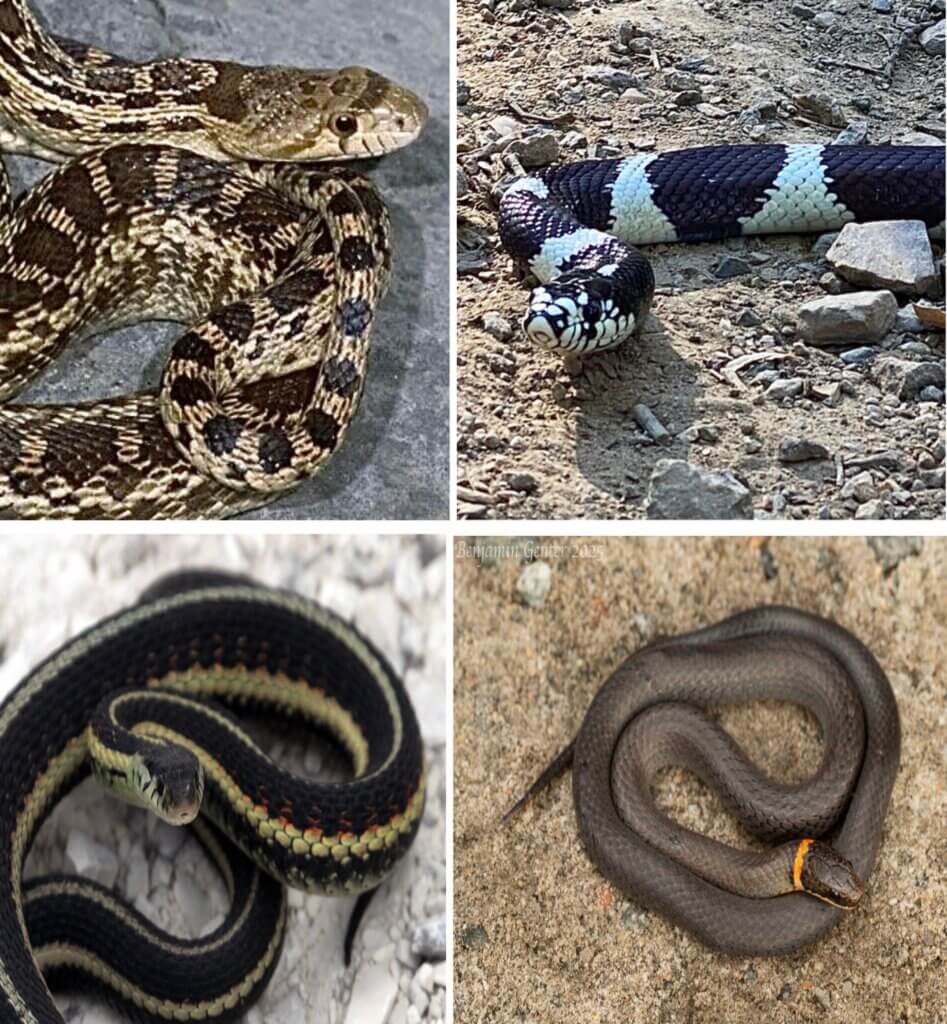
California gopher snake (top left): With brown markings on a tan background, this handsome snake can grow to over 7 feet long, but 4 to 5 feet is more typical. Though it resembles a rattlesnake, its head is small and its tail ends in a sharp point—no telltale rattles.
California kingsnake (top right): With alternating black and white stripes, this eye-catching snake grows to about 3½ feet long. Its diet includes small mammals and reptiles, even rattlesnakes.
Red-sided garter snake (bottom left): The snake reaches 2 to 4 feet in length, with bright yellow stripes on a dark green background, with small red patches between the stripes. The snake’s habitat ranges from grasslands to boggy marshland.
Pacific ring-necked snake (bottom right): Most often discovered curled up under damp logs or rocks, this slender little snake (typically no more than a foot long) is easily identified by its reddish necklace and coral-colored belly.
For more about China Camp’s wildlife, see the Nature section of our website.—HM
Events
A summer-ful of fun
Bored? Impossible, when China Camp is in your backyard. Have a day of DIY play-day at the beach or other summery fun, or take part in one of our outstanding monthly events. We’ve got activities and experiences to cover all kinds of interests—history, nature, creativity and the arts, culture. Kids can join special Junior Ranger programs too. Be sure to check out all our upcoming events.
.jpg)
.jpg)